
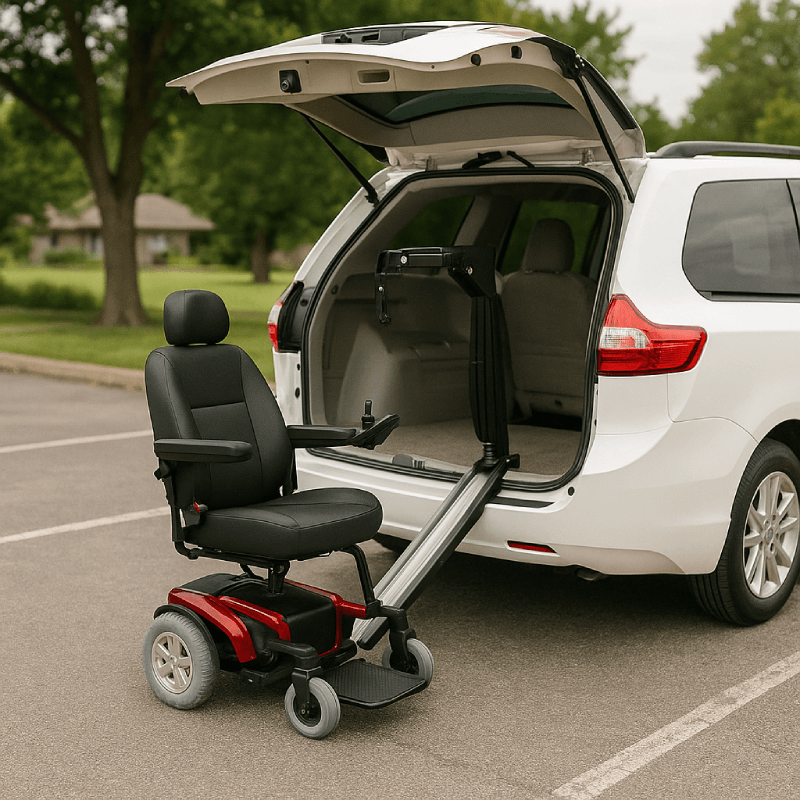
Choosing a vehicle lift for your power chair is not just about finding something that fits on the back of a car. The right setup has to match your chair, your vehicle, and the way you actually travel every day. When those pieces line up, loading becomes smooth, predictable, and far less stressful. When they do not, even an expensive lift can feel awkward, heavy, or inconvenient.
This guide breaks down the main lift styles, the questions that matter most, and several real ZMI Mobility options worth comparing before you commit. Whether you drive an SUV, van, truck, or mobility-ready vehicle, the goal is the same: safe transport that supports independence instead of complicating it.
Why choosing a vehicle lift feels more complicated than it should
A vehicle lift has to solve more than one problem at the same time. It needs to handle the size and weight of your power chair, work within the physical limits of your vehicle, and still be practical when you are tired, in a rush, or loading in a tight parking lot.
- Some lifts are better for large, heavy power chairs.
- Some work best when you want the chair protected inside the vehicle.
- Some are much easier for solo loading, while others make more sense when a caregiver is helping.
- Some require more hitch capacity, cargo height, or interior clearance than people expect.
That is why a good buying process starts with real-life use, not just a product brochure. If you are comparing options in the Vehicle Lifts category, it helps to think about your daily routine first and the hardware second.
The three main types of vehicle lifts
Hitch-mounted platform lifts
These lifts mount to the rear hitch and carry the chair outside the vehicle. They are a strong option for many larger power chairs because they avoid the need to lift into the cargo area. They are also easy to understand visually: the chair rides on a platform, and the lift handles the heavy movement for you.
The tradeoff is exposure. Your chair sits outside the vehicle, so weather, road grime, and added vehicle length all become part of the equation. Hitch lifts can also affect rear visibility and parking convenience, depending on the model and vehicle.
Interior hoist lifts
Interior lifts load the chair into the cargo area of the vehicle. Many people like them because the chair stays protected from the elements and out of sight when parked. These systems can work especially well when you want a cleaner exterior setup and have enough interior space to support the lift path.
The main limitation is clearance. The cargo opening, seat arrangement, and lift geometry all matter. On some vehicles, an interior lift works beautifully. On others, it creates too many compromises.
Hybrid interior platform lifts
Hybrid systems combine the stability of a platform-style approach with the protection of interior storage. They are often appealing to people who want powered lifting without leaving the chair exposed outside. These lifts can be excellent for SUVs, vans, and trucks when the cargo area and device size are a good match.
If you want a middle ground between outside transport and a traditional hoist, hybrid lifts are often worth a close look.
Start with the power chair, not the vehicle
Many buyers focus on the car first, but the chair should usually lead the conversation. Not every power chair loads the same way, and small differences in footprint or weight can change which lift is realistic.
- Total weight: Chair weight is one of the first filters for lift compatibility.
- Overall size: Seat width, base dimensions, and turning shape all affect storage and loading.
- Ground clearance and drive wheels: These details can change how a chair docks or sits on a platform.
- Transport posture: Some chairs travel more naturally than others depending on their design.
For example, a smaller portable chair such as the Pride Go-Chair may open the door to more compact lift solutions, while a larger full-time chair in the Power Chairs category may call for a heavier-duty platform or hybrid system.
Then confirm what your vehicle can realistically support
Once you know what the chair needs, the next step is verifying the vehicle. This is where people often discover that a lift they liked online is not the best fit for their actual SUV, truck, or van.
- Hitch class and tongue weight: A hitch-mounted lift needs enough structural support.
- Cargo opening height and width: Interior lifts live or die on clearance.
- Interior depth: The chair has to fit once it is inside, not just clear the opening.
- Seat layout: Some interior systems work best when certain seats fold or are removed.
- Rear access habits: If you use your cargo area constantly, an interior lift may create tradeoffs you should think through first.
This is also a good point to check the vehicle manual and, when useful, review broader consumer safety guidance from NMEDA. Manufacturer fit information matters, but so does experienced local installation guidance.
Questions that matter in real everyday use
Two lifts can look similar on paper and feel completely different in daily life. Before choosing, ask practical questions that go beyond specs.
- Will you usually load the chair alone or with help?
- Do you want the chair protected inside the vehicle?
- Are you parking in tight shopping-center spaces or narrow home driveways?
- Will heat, dust, or weather exposure be a concern?
- Do you need quick loading for frequent short trips, or are you optimizing for longer travel days?
These answers often clarify the decision quickly. A lift that is slightly less compact but much easier to use every day can be the better long-term choice.
ZMI Mobility lift options worth comparing
If you are narrowing the field, these are several strong examples from ZMI Mobility’s current lineup:
- Bruno Out-Rider: A truck-bed lift that makes a lot of sense for pickups when you want secure transport and smooth powered movement into the bed.
- Harmar AL500/AL500HD: A heavy-duty hitch-mounted lift designed for power chairs of many sizes. This is a strong candidate when durability and straightforward outside transport matter most.
- Harmar AL6000: A hybrid interior lift built for SUVs, vans, and trucks. It is a useful option when you want the chair stored inside the vehicle rather than on an exterior platform.
- Harmar AL690: A compact interior lift that can be attractive when cabin space, convenience, and a cleaner loading path are priorities.
These examples show why there is no single “best” answer for every driver. The right lift depends on how your specific chair and vehicle interact.
When a hitch-mounted lift is usually the better choice
Hitch lifts often make the most sense when you use a larger power chair, want to preserve interior seating, or prefer a system that avoids lifting into the cargo area. They are also useful when chair size makes interior storage unrealistic.
You may lean toward a hitch-mounted option if:
- your power chair is large or heavy
- your vehicle has limited cargo height
- you want fast loading with minimal interior rearranging
- you do not mind the chair riding outside the vehicle
- your hitch capacity supports the lift safely
When an interior or hybrid lift may be the better fit
Interior and hybrid lifts are appealing when weather protection, cleaner exterior appearance, and locked interior storage matter more than open-platform convenience. Many drivers also prefer them when they want the chair shielded from sun, dust, and road debris.
You may lean toward an interior or hybrid lift if:
- you want the chair stored inside the vehicle
- your cargo opening and interior space can support the lift path
- you value a more protected setup for long-term equipment care
- you are comfortable dedicating some cargo or seating space to the lift system
What installation and long-term support should look like
A vehicle lift should not be treated like a simple accessory. Fit, mounting, electrical integration, docking position, and user training all affect the experience after installation. A poor setup can make even a good product frustrating to use.
A strong installation process usually includes:
- reviewing the chair and vehicle together
- confirming weight and clearance requirements
- checking loading angles and daily access needs
- explaining how to operate the lift safely and confidently
- making sure service support is available after the install
If you are also planning broader transportation accessibility changes, ZMI’s Vehicle Access Solutions page is a helpful next stop.
How ZMI Mobility helps you choose the right fit
The biggest value in this process is not just the lift itself. It is getting the fit right before you spend the money. ZMI Mobility helps compare chair size, vehicle constraints, transfer needs, and loading preferences so the recommendation reflects real life, not just catalog specs.
If you are still deciding between outside and inside transport, or between two different lift styles, start with the broader Vehicle Lifts collection and then reach out through Contact Us for guidance. A short conversation now can prevent a very expensive mismatch later.