
A trip to the shops, lunch with a friend, or moving comfortably from the kitchen to the living room—these are the moments a mobility device should help make easier. When you begin comparing a mobility scooter with a power chair, the choice can quickly turn into a list of unfamiliar features.
A better starting point is your everyday routine. How do you want to get around? Which spaces do you use most? What feels comfortable for your hands, back, and legs? This guide helps you bring those questions into focus and gives you practical things to discuss with the ZMI Mobility team.
What is the difference between a scooter and a power chair?
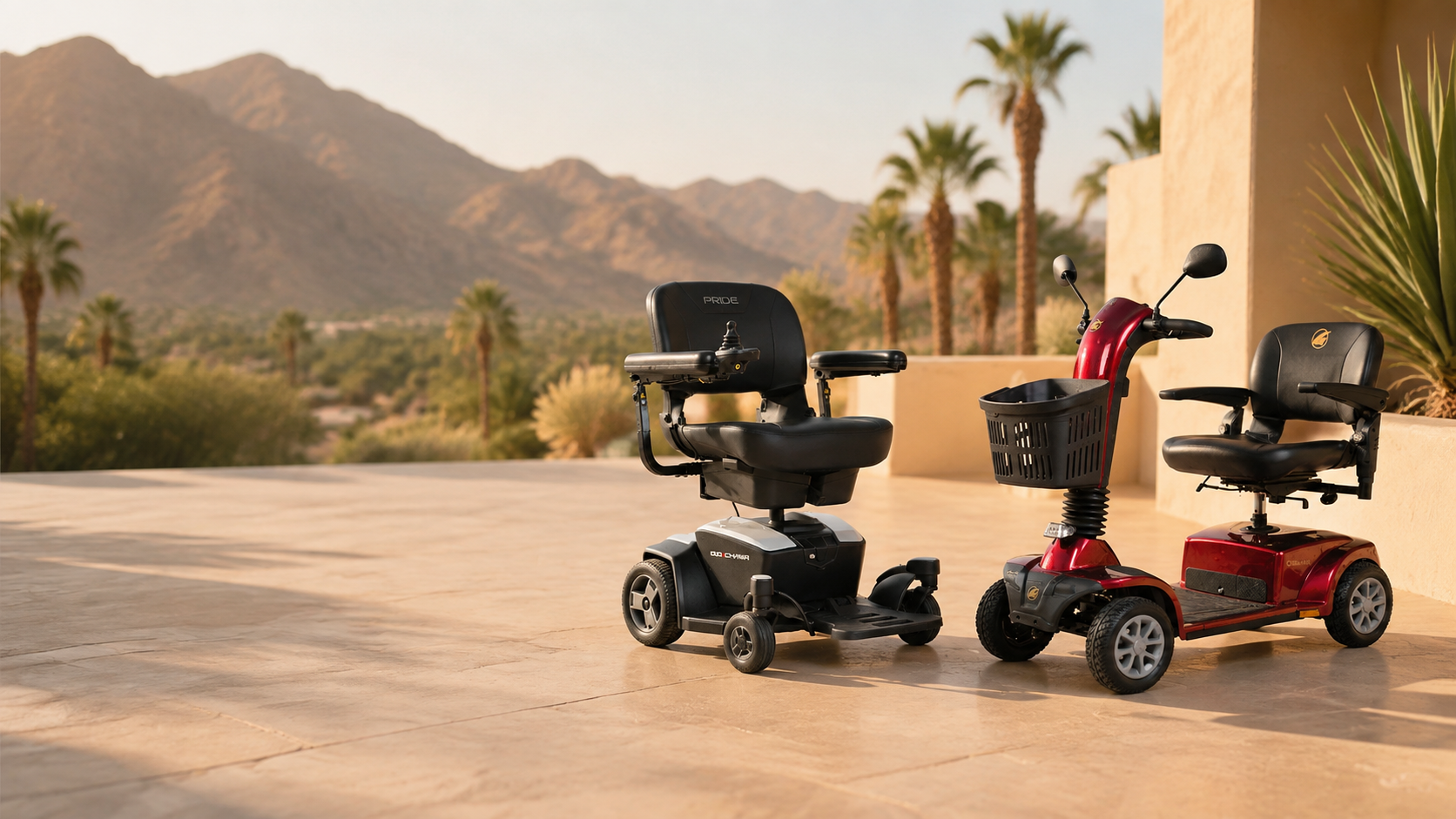
A mobility scooter generally has a seat above a platform and a steering column called a tiller. You reach forward to steer and operate its controls. A power chair commonly uses an armrest-mounted joystick, with the seating and controls arranged around the person using it.
That difference changes how you reach, steer, and position yourself. Pride Mobility’s overview explains these basic control layouts. Within each category, however, there are different sizes, seating options, and transport designs. The label alone will not tell you whether a particular model works for you.
A quick comparison for everyday decisions
| Your everyday needs | Mobility scooter | Power chair |
|---|---|---|
| Using the controls | Usually steered through a tiller in front of you. | Commonly controlled by a joystick beside the seat. |
| Moving through rooms | Check the full length and the space needed to turn. | Check the drive layout, footprint, and turning space. |
| Comfort and support | Try the seat, foot space, and reach to the tiller. | Try the seat, armrests, foot support, and control position. |
| Taking it in a car | Some models fold or disassemble; others need different transport arrangements. | Portable models exist here too; confirm how the specific chair travels. |
| Outdoor trips | Check the manufacturer’s limits for surfaces, slopes, and weather. | Check those same limits for the exact chair and configuration. |

Start with comfort and the way you use the controls
Imagine using the device for an ordinary outing, including the time spent waiting, talking, or sitting at a table. Can you reach the controls without stretching? Do your feet have a comfortable resting position? Can you keep your shoulders relaxed while steering?
Tell the team about discomfort, fatigue, or movements you find difficult. Ask which adjustments are available on the model you are considering. If you need help with posture, pressure management, or transfers, involve an occupational therapist, physical therapist, or seating specialist in the selection. A standard travel chair and a chair configured for complex seating needs are different products.
Your preferences matter too. Some people feel at home with a tiller; others prefer a joystick. A supported demonstration gives you a much clearer impression than a product photograph.
Picture your home, your favorite shops, and your usual route
Start at your front door and think through a typical day. There may be a narrow hallway, a turn into the bathroom, a restaurant table, or a shop entrance that needs extra room. Measure the spaces that concern you and bring photos to your consultation.
Ask to compare the actual dimensions and turning requirements of the models on your shortlist. A compact power chair may be worth exploring where space is limited, but size and handling vary within both categories. Try the kinds of turns and approaches you regularly make, with guidance from the team.
For outdoor use, describe the route honestly: smooth pavement, uneven paving, thresholds, or slopes. Review the model’s manual with the team rather than assuming that a larger device can handle every surface. Planning where you will store and charge it is part of making it useful every day.

Plan the car journey before choosing the device
A device can feel excellent in a showroom and still be awkward to take to your favorite places. Bring your vehicle details into the conversation early. Think about the trunk opening, available storage space, other luggage, and who will do the loading.
ZMI’s catalog includes the Pride Go-Chair, a useful example of a power chair designed to come apart for transport. Pride’s current Go Chair information confirms its disassembly design. That does not mean every person can lift its components or that it fits every car; ask to check both.
The same practical questions apply to a portable scooter. How many parts are there? What is the heaviest part? Can the person loading it manage the movement comfortably? If lifting is not a good fit, our vehicle lift guide is a useful next read. Transport compatibility needs to be checked for the device and vehicle together.
Explore examples from ZMI’s catalog
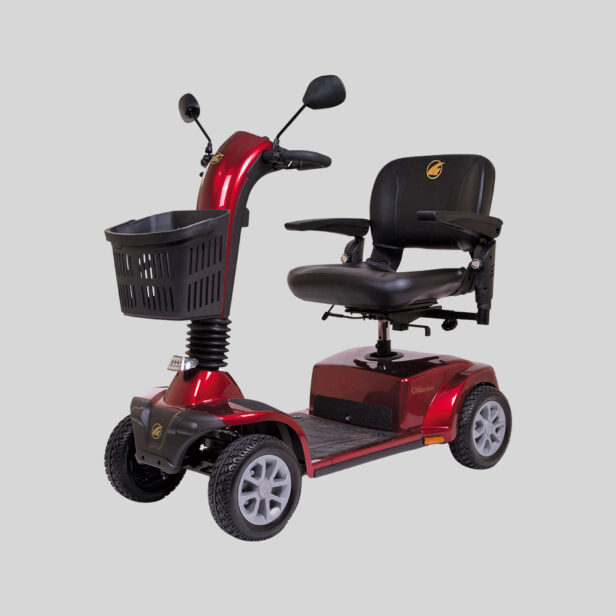
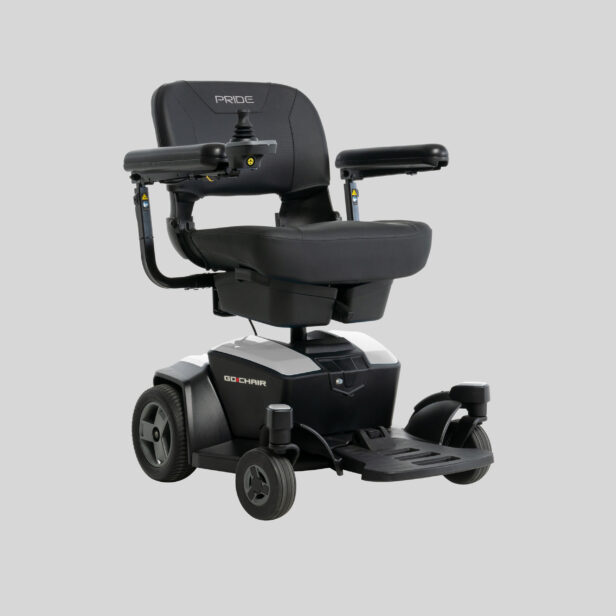
Use these listings to begin a conversation about the features you want to try. They are starting points, with current models and availability to be confirmed by the team.
- Golden Technologies Power Scooters: ZMI’s listing introduces the Companion range. Ask about tiller reach, seating adjustments, and the transport arrangements for the exact model offered. Golden’s current Companion page shows why checking the model and generation matters.
- Pride Power Scooters: The catalog introduces the Victory range. Bring your everyday route and storage needs so the discussion can focus on a suitable configuration.
- Pride Go-Chair: A starting point for comparing joystick control and a portable power-chair design.
You can also browse the wider Power Chairs and Power Scooters categories to see the options represented on the site.
What to bring to a consultation
You do not need a finished shortlist. Bring a picture of the life you want the device to support:
- The places you visit and the tasks you want to make easier.
- Measurements or photos of tight doorways and turning spaces.
- Your vehicle details and who will help with transport, if anyone.
- Questions about comfort, control reach, and getting on and off.
- Your storage and charging arrangements.
- Your budget, plus questions about servicing, batteries, and ongoing support.
Ask what you can try before deciding and what support is available afterward. Leave enough time to compare the details that matter to you; a comfortable first impression is useful, but so is knowing how the device will fit into tomorrow’s routine.
Find a fit that gives you more room to enjoy your day
The right choice should help you feel comfortable getting where you want to go. It might make an errand less tiring, a visit easier to arrange, or movement around your home more manageable.
Contact ZMI Mobility to talk through your routine and compare the available options. Together, we can work through the practical details of your body, your spaces, and your transport plans.